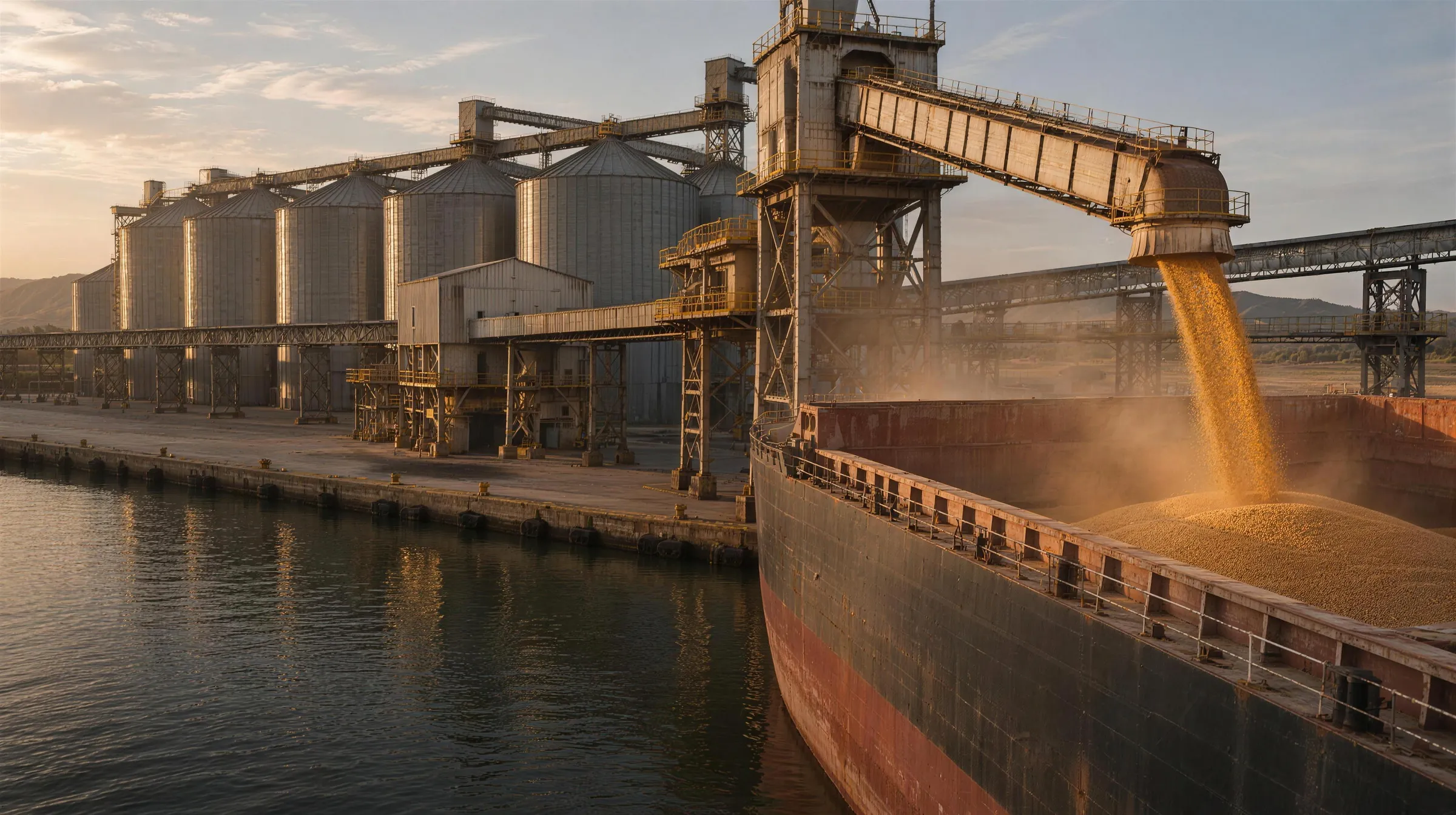
The widely discussed forecasts of Jiang Xueqin, the Yale-educated Chinese commentator who uses game theory to make remarkably accurate predictions about global developments, underscore the strategic importance of food production and support the investment thesis that Brazil could become even more indispensable as a supplier of food at scale and at competitive costs in a world increasingly exposed to severe supply disruptions. Two of his lectures are particularly relevant.
In his recent lecture, Game Theory #15 — The Return of History, dated March 24, 2026, he predicts that the global order will shift from pursuing efficiency to prioritizing resilience. Disruptions to trade in energy and fertilizers could trigger food shortages. In the same lecture, he also emphasizes that water and food scarcity could leave densely populated countries, particularly China and India, vulnerable to instability. This supports the thesis that countries capable of sustaining production and supply would gain strategic relevance, while reinforcing the value of reliable external suppliers. Jiang does not, however, suggest that Brazilian leadership is inevitable.
Subsequently, in Game Theory #19 — The Hollywood-Pentagon Complex, dated April 7, 2026, he predicts that military escalation in the Middle East could disrupt energy and fertilizer supplies, impair planting and potentially cause famine, particularly in Africa and South Asia. His central argument is that food security also depends on secure supplies of agricultural inputs and reliable trade routes. These arguments appear in the transcripts of both lectures on predictivehistory.com.
The two lectures cited


In Lecture #19, Jiang goes so far as to claim that, without fertilizers, global food production could sustain only 1–2 billion people rather than 8 billion. This is a particularly extreme assertion, for which he provides no supporting model.
In our strategic assessment, Brazil’s opportunity lies in supplying the exportable surplus that other countries need. We may never become the world’s largest producer in absolute terms, but under these scenarios, we could become its most important food supplier in international trade. This does not mean that Brazil would be immune to the disruptions Jiang describes: we rely heavily on imported fertilizers. Embrapa estimates this dependence at approximately 85%. Brazilian soybean production benefits from a partial buffer through biological nitrogen fixation, but remains dependent on other nutrients. A global disruption in agricultural inputs could therefore also increase our costs and constrain production.
Brazil undoubtedly has the capabilities to strengthen its role as an indispensable supplier of food at scale and at competitive costs. In a world increasingly concerned about supply security, translating this capacity into reliable delivery—with the necessary inputs, storage, logistics and financing—could become one of the country’s greatest sources of global competitive advantage. For those of us operating in the sector through Tauri Agrícola, this proposition is particularly compelling: Brazil’s production advantage creates value when someone can connect supply with demand efficiently and reliably.
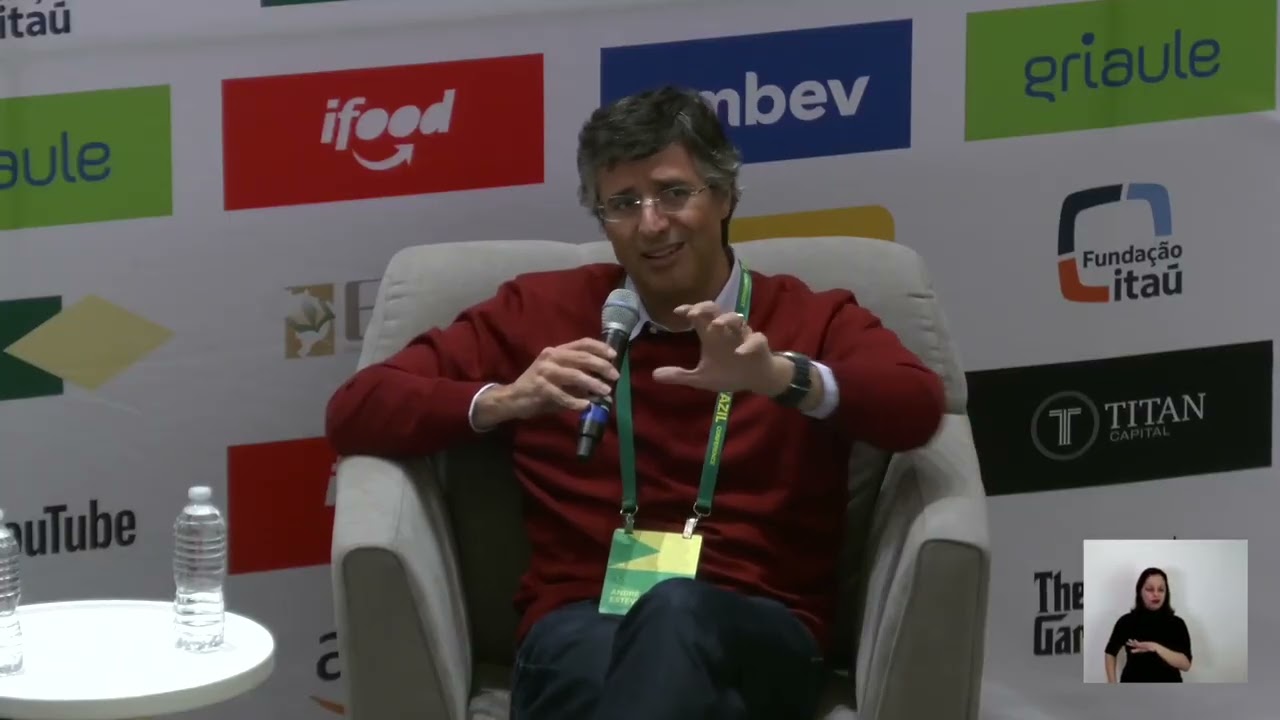
At the 11th Brazil Conference, held on April 12, 2025, at Harvard University, André Esteves, Chairman of BTG Pactual, also highlighted Brazil’s potential to become the world’s leading provider of food security during the panel discussion “Brazil: Risk and Opportunity.”
According to Esteves, Brazil will account for 80% of the incremental growth in global food consumption over the next twenty years—a unique geopolitical position. Although he does not identify the study underpinning that percentage in his remarks, the statement conveys his conviction in this long-term vision of Brazil’s major global competitive advantage. That vision began taking shape in 2013 with the establishment of BTG Commodities, which was reorganized under the Engelhart brand in 2016. Today, it is the country’s largest soybean oil exporter.
BTG’s footprint in the sector has been expanding exponentially. Its growing investments in agribusiness speak for themselves. One example is the agreement for the PAR14 terminal at the Port of Paranaguá, signed in September 2025, approximately R$1.2 billion in investment by BTG Pactual Commodities Sertrading—a direct demonstration of its commitment to physical export infrastructure. The bank had acquired Sertrading a year earlier, after the company recorded R$19 billion in foreign trade revenue in 2023. Its acquisition of a 49.9% stake in the CERES group in 2025 brings BTG closer to regional origination networks and strengthens its relationships with businesses across the value chain. That same year, publicly listed SLC announced a partnership with private equity investment funds (FIPs) administered by BTG, through special purpose entities owned 50.01% by SLC and 49.99% by the funds, to invest in land acquisitions and leases, irrigation and agricultural infrastructure.
Finally, the R$10 billion base offering, potentially increasing to R$20 billion through an additional allotment, announced in August 2026 when BTG officially launched the establishment of the country’s largest FIAGRO fund, signals the scale of its ambitions. XP Investimentos has followed closely. In addition to XP Portos FIP, launched in February 2024, and XP Crédito Agrícola Fiagro, both managed by XP Asset, XP announced the R$5.3 billion XP CDI CRA Fiagro in October 2026. With a greater focus on agroindustrial credit assets, its size was sufficient to make it Brazil’s third-largest investment fund focused on the agribusiness value chain.
These developments provide compelling evidence for the argument behind our presentation’s title: major institutions are turning agribusiness credit into a multibillion-real business platform. There is, however, a significant difference from the sector’s initial courtship with Brazil’s financial industry, when third-party financing through Rural Product Notes (CPRs), Agribusiness Receivables Certificates (CRAs) and barter arrangements gave rise to a major wave of defaults and court-supervised restructurings that soured the relationship between agribusiness and Faria Lima, Brazil’s financial hub.
A new dimension makes the thesis more precise: these new funding and asset distribution structures will be backed by transactions originated by the financial institutions themselves. Accordingly, the announced amounts do not translate entirely into fresh capital for farmers or direct investment in their infrastructure. They also reflect the financial capacity that major investment banks are building to support their own multibillion-real agricultural operations.
Our strategic assessment is that the opportunity extends beyond producing commodities: it encompasses originating, financing, structuring and distributing credit across the entire agroindustrial value chain. For Tauri, this is the most relevant development: the connection between physical production and capital markets is achieving institutional scale, and institutional capital is expanding its presence in Brazilian agribusiness through dedicated structures of its own.
Alexandre de AzambujaFounder & Chief Visionary Officer (CVO)